Forehead Filler: Breaking the Taboo

Forehead filler remains a debated topic due to the inherent risks associated with the region’s vascular anatomy.
The FDA has recently approved Juvéderm Voluma XC for improving moderate to severe temple hollows in adults aged 21 and older. However, multiple other fillers have shown clinical efficacy in other forehead aesthetic concerns in off-label use.
This article explains the mechanism and benefits of forehead fillers, product options, and injection techniques for this high-risk area. We’ll also review the best practices and clinical data supporting the safe use of fillers in the forehead.
Key Takeaways
- Forehead fillers work by restoring volume to the subdermal tissues and diminishing the appearance of lines and folds.
- Hyaluronic acid-based fillers, like Restylane and Juvederm, attract water molecules, causing tissue expansion and improving skin plumpness.
- The benefits of forehead fillers include reduced frown lines and horizontal forehead furrows, and improved facial symmetry.
- Unlike surgical options, forehead fillers are non-invasive with minimal downtime and provide subtle, natural-looking results.
How Do Forehead Fillers Work?
Forehead fillers restore volume in the subdermal tissues, which diminishes the appearance of lines and folds.
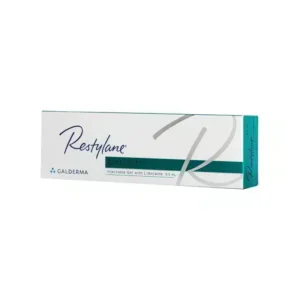
Hyaluronic acid-based fillers, such as Restylane and Juvederm, attract water molecules due to their hydrophilic nature and cause tissue expansion with increased skin plumpness. The injectable substance also forms a scaffold beneath the skin for structural support.
Over time, hyaluronic acid is metabolized by hyaluronidase, but the effects persist because the filler stimulates collagen production through fibroblast activation. The induced collagenogenesis further supports the skin’s elasticity and firmness.
Forehead Filler Benefits
Forehead fillers have gained traction in aesthetic medicine because they have shown consistent benefits.
A study evaluated the safety and efficacy of forehead augmentation using a PCL-based dermal filler in 58 patients aged 20-65. It found a significant increase in Global Aesthetic Improvement Scale (GAIS) between months one and three that remained stable through 24 months. [1]
A recent case report also highlighted the use of dermal fillers as a minimally invasive alternative to surgical excision for the camouflage of a forehead osteoma. A hyaluronic acid-based filler was injected into the deep subcutaneous plane over the bony prominence using a cannula. [2]
Important benefits of forehead fillers include:
- Diminished frown lines (also known as “11 lines”) between the eyebrows
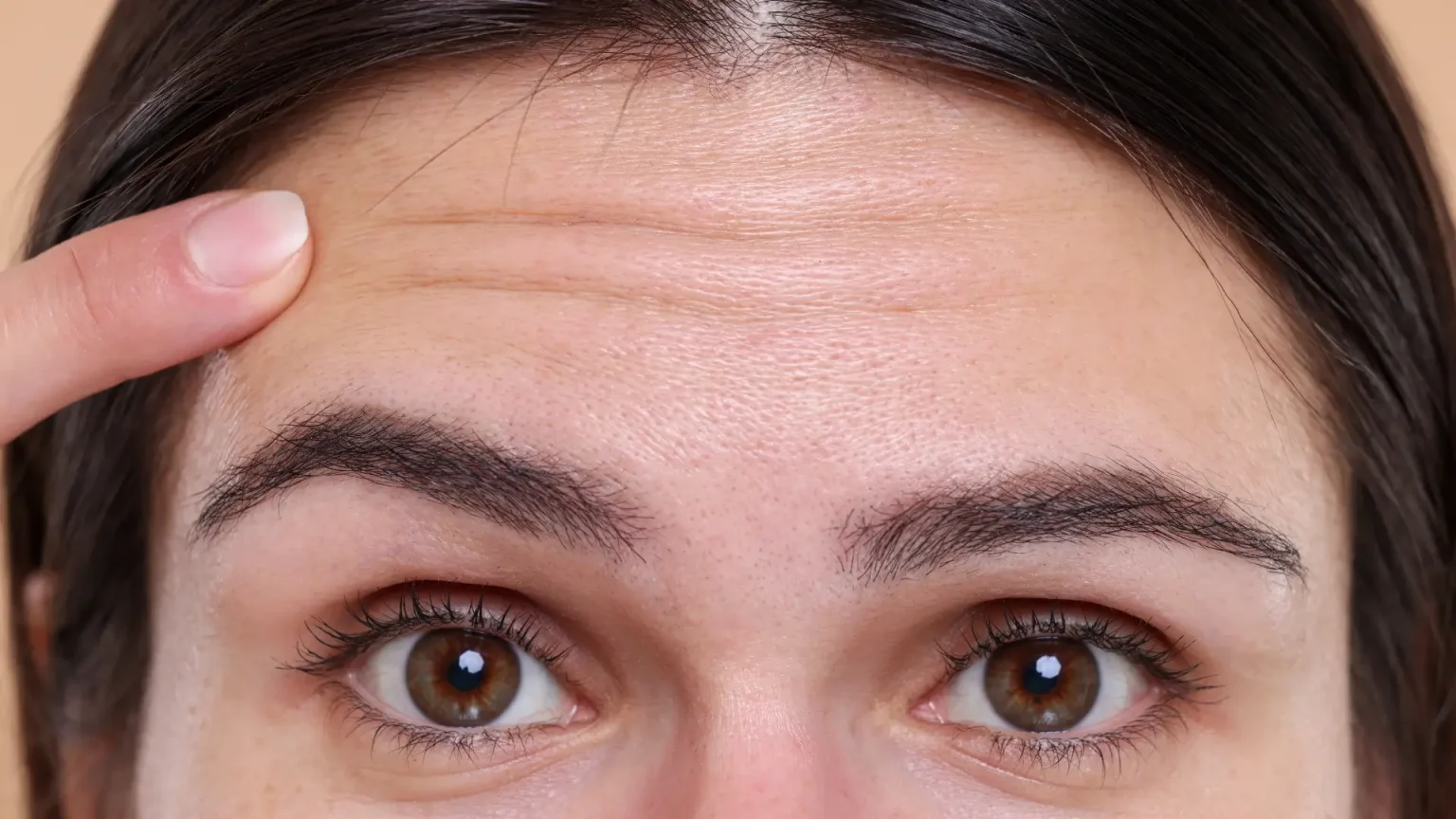
- Reduced horizontal forehead furrows
- Lifted droopy brows
- Improved facial symmetry
Who Is a Good Candidate for a Forehead Filler?
A good candidate for forehead filler for volume or wrinkles is an individual who meets the following criteria:
- Has persistent lines, especially after previous treatments like neurotoxin injections, threads, or skin resurfacing techniques
- Understands the potential outcomes and limitations of the procedure
Patients must be aware that forehead filler injections (except Juvéderm Voluma XC) are off-label and considered high-risk due to the proximity of critical vascular structures and the thin skin in this region.
There are also some candidates who are not a good fit for forehead filler treatment. They include:
- Patients with active infections, skin rashes, or dermatologic conditions such as acne vulgaris, rosacea, or eczema in the forehead region
- Patients with autoimmune diseases, particularly those affecting the skin (e.g., systemic lupus erythematosus and dermatomyositis), or individuals with a history of keloid or hypertrophic scarring
- Pregnant or lactating females
- Patients with known allergies to the filler ingredients (e.g., hyaluronic acid, lidocaine, or carboxymethylcellulose)
- Patients with bleeding disorders (e.g., hemophilia or von Willebrand disease) or those on anticoagulant therapy
Forehead Filler Injection Technique
Below is a detailed step-by-step guide for the forehead filler technique.
Pre-treatment Assessment
The first step is a comprehensive patient evaluation, including a detailed medical history and physical examination.
Assess the patient’s specific aesthetic concerns, such as dynamic and static forehead, and the degree of volume loss in the upper face. Determine the appropriate dose of filler based on your assessment.
1-2 mL of the filler is used for the first treatment, and additional filler can be injected during follow-up sessions at 4-week intervals to gradually build the desired effect.
Pain Management
Prior to injection, a topical anesthetic such as EMLA or LMX cream is applied to the forehead with a plastic wrap for better absorption, ideally 45 minutes before treatment. For further comfort, local anesthetic (such as lidocaine) can be injected into the treatment area.
Many hyaluronic acid-based fillers (e.g., Restylane Lyft and Juvederm Voluma) contain lidocaine within the filler. In addition, ice should be applied briefly to the treatment area before and after the injection to further reduce pain and swelling.