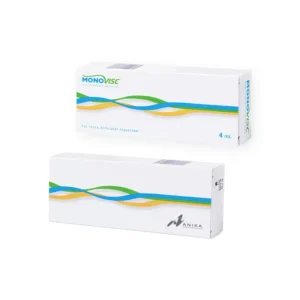
Sodium hyaluronate is part of the high-molecular-weight hyaluronic acid fraction, which helps balance the synovial fluid’s viscoelasticity. It also activates the tissue repair processes in the joint cartilage, improving joint function and reducing pain.
Viscosupplementation therapy often capitalizes on sodium hyaluronate, which is injected into the affected joint. This thick fluid lubricates and cushions the joint, minimizing the symptoms brought by knee osteoarthritis (OA). Medical professionals may only recommend viscosupplementation when the first line of treatments has not taken effect.
Compared to other OA treatments, nonsteroidal anti-inflammatory drugs (NSAIDs) only provide short-term pain relief for the symptoms; duloxetine can also temporarily address chronic pain, while physical therapy is best used alongside another OA treatment for muscle strengthening and joint flexibility.
Clinical Efficacy and Development of Sodium Hyaluronate
Bioventus produced the Durolane single-injection therapy to address knee osteoarthritis (OA) symptoms. Bioventus maintains its dedication to transforming OA and joint-related treatments. In 2019, Bioventus initiated a collaborative development agreement with MTF Biologics to create an advanced placental tissue product for knee OA jointly. Their partnership also explores broader applications beyond knee OA.
The manufacturer developed the recommended Durolane dosage of 3 mL, which contains high-molecular-weight hyaluronic acid (HA) and NASHA technology to crosslink HA molecules for longer-lasting effects. Moreover, the US Food and Drug Administration has approved Durolane injections temporarily treating knee OA.
The clinical studies evaluated reveal consistent and lasting relief of knee osteoarthritis (OA) symptoms after a single NASHA injection. Furthermore, NASHA exhibits excellent biocompatibility as an intra-articular OA therapy, evidenced by the minimal occurrence of adverse events associated with treatment.
A study by Velasco et al. (2017) indicates that using NASHA for viscosupplementation effectively alleviates symptoms of rhizarthrosis and is well tolerated by patients. Various patient testimonials highlight Durolane dosage’s efficacy, potential Durolane side effects, and safety.
Conclusion
Understanding Durolane and its generic name, sodium hyaluronate, shed light on its role in managing the chronic symptoms of knee osteoarthritis (OA). By highlighting its pharmacological properties and clinical efficacy, it emphasizes sodium hyaluronate’s significance in viscosupplementation therapy.
Additionally, the information on Durolane’s development, dosage, and FDA approval offers valuable insights into its potential for knee OA treatment. This underscores its substantial impact in providing consistent and long-lasting relief for individuals suffering from knee OA. Clinical studies and patient testimonials demonstrate its safety and efficacy.
FAQs
1. What is the key role of Sodium Hyaluronate in managing knee osteoarthritis (OA) symptoms?
Sodium Hyaluronate acts as a lubricant and shock absorber for the joints, enhancing joint function and reducing pain, making it a safe and effective solution for addressing knee OA.
2. What is the recommended Durolane dosage and its composition?
The recommended Durolane dosage is 3 mL, containing high-molecular-weight hyaluronic acid (HA) and NASHA technology, which crosslinks HA molecules for longer-lasting effects.
3. How does Durolane compare to other treatments for knee osteoarthritis?
Durolane offers single-injection therapy, providing consistent and long-lasting relief for knee osteoarthritis symptoms, distinguishing itself from short-term relief treatments such as NSAIDs and duloxetine.